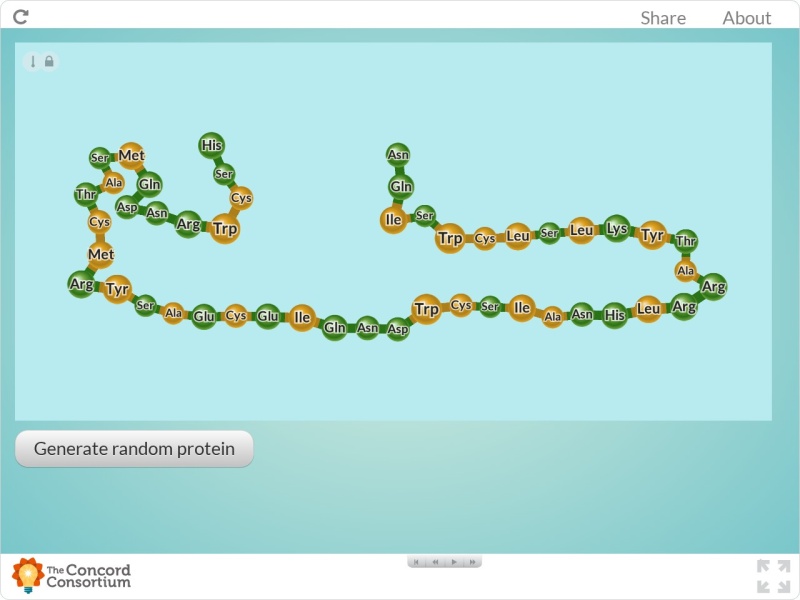
DNA to Protein Variations: Random Protein Synthesis Interactive
Resource Description
Related Resources

Build a Molecule
Emily Moore (Lead), Jonathan Olson (Lead Developer), John Blanco (Developer), Sam Reid (Developer), Kelly Lancaster, Kathy Perkins, Christine Denison

Assessing Seismic Hazards and Risk with Code (Public)
In this module students develop block-based computer codes to explore the causes, likelihood, and potential for damage of earthquakes in California.
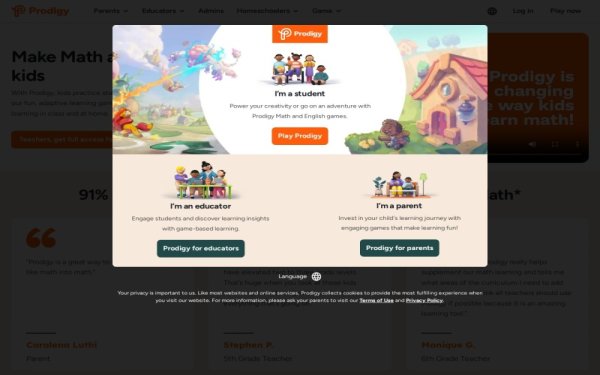
Prodigy Game
Prodigy Game is an engaging, curriculum-aligned math platform that transforms learning into an adventure for K-8 students. Through an interactive fantasy game world, students practice essential math skills tailored to their individual learning pace and needs, fostering fact fluency and critical thinking. Teachers can utilize Prodigy for differentiated instruction, assigning specific skills, tracking student progress, and generating valuable insights into performance. A free version is available, making it an accessible tool for enhancing mathematical understanding and engagement in the classroom.