Code.org
Resource Description
Related Resources

YouthQuake: Investigating Earthquakes with Code
Through block coding with the GeoCoder, students will investigate how land movement causes earthquakes and how deformation build-up poses risks to people and their communities.
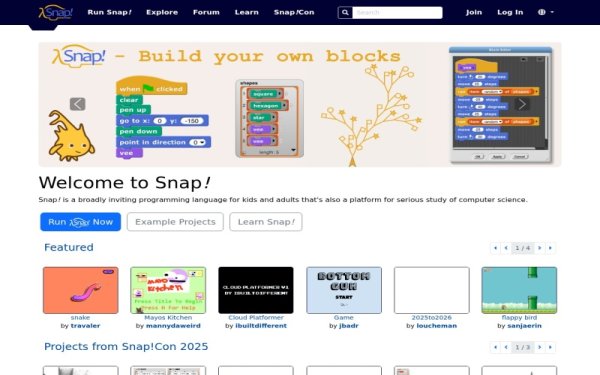
Snap! Build Your Own Blocks
Snap! is a powerful, blocks-based programming language developed by UC Berkeley, designed to introduce students to fundamental computer science concepts. It empowers learners to not only drag and drop pre-defined blocks but also to create their own custom blocks, fostering deeper understanding of abstraction and algorithm design. This interactive platform supports the development of computational thinking and creativity, making complex programming ideas accessible for a wide range of educational levels, including high school and introductory college courses, and is used in AP Computer Science Principles curricula. Snap! is a free, web-based tool, making it easily accessible without installation and allowing students to save and share their projects.

Code.org (Hour of Code)
The Hour of Code, powered by Code.org, is a global movement designed to introduce K-12 students to the fundamentals of computer science through engaging, one-hour tutorials. It offers a wide array of activities from various partners, making coding accessible and fun for all ages and skill levels, even for those with no prior experience. Teachers can easily integrate these free, interactive lessons into their curriculum to foster computational thinking and digital literacy. This initiative serves as an excellent entry point for students to explore coding and develop critical problem-solving skills.